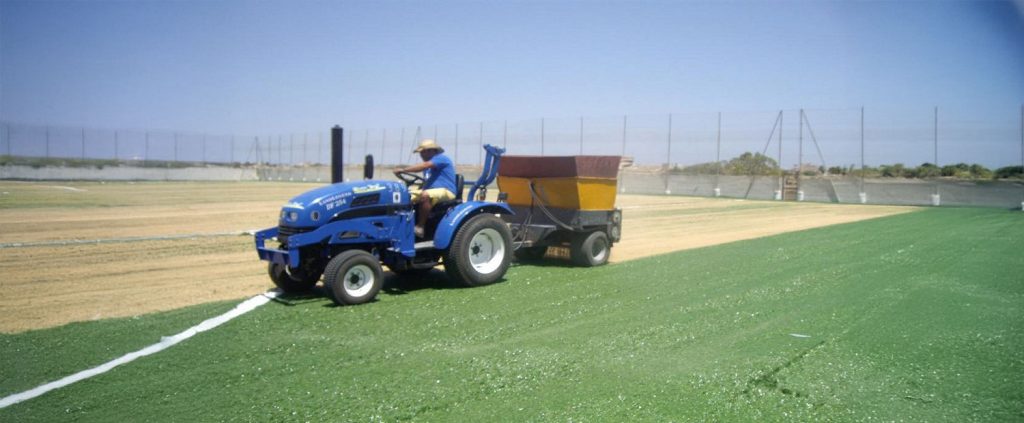
Silica dust can cause serious lung diseases — including silicosis, COPD, and lung cancer — if inhaled over time.
Artificial turf and foundry sand handling might look harmless, however dried silica sands can release fine respirable dust when tipped, spread, or dispensed.
The hazard is real, measurable, and largely unregulated.
It’s time to start treating silica infill and foundry sand handling as genuine RCS exposure risks.
Artificial turf systems almost always use washed and kiln-dried silica sand as an infill material.
Whilst sieve analysis of particle size varies per source and grading chart or product type, it is common to fine respirable dust presence in foundry dried silica sands. Once it’s tipped, transferred, or trafficked, fine respirable dust (<10 µm) is commonly released and that fraction can contain crystalline silica (SiO₂).
Importantly, the major risk is to surfacing installers. Once a surface installation is complete there is virtually no ongoing risk.
Similarly, foundry sands, particularly dried, reclaimed, or new silica sands used in moulding and casting operations can release respirable crystalline silica when dispensed, tipped, or transferred on site.
Whether in sports turf installation or industrial foundry operations, the hazard mechanism is the same: dry silica dust becomes airborne through high-energy handling and disturbance.
Where the exposure occurs:
| Task | Mechanism | Exposure potential |
|---|---|---|
| Tipping sand from bulk trucks or bags | High-energy drop → dust cloud | High |
| Shovelling into barrows, hoppers, spreaders | Agitation + wind lift | Moderate–high |
| Mechanical or manual spreading on turf / sand reclaim | Disturbance across broad area | Moderate |
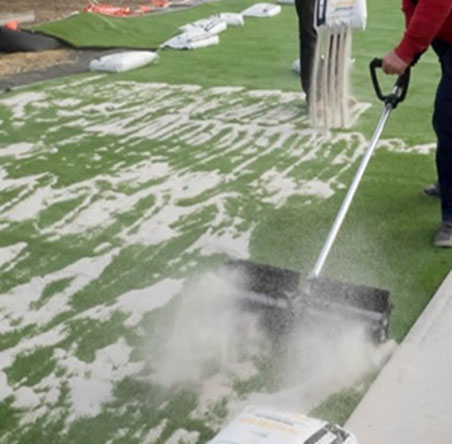
| Brushing / grooming (especially dry) | Surface abrasion → fine dust | High |
| Foundry sand dispensing or reclamation | High mechanical agitation | High |
| Maintenance (vacuuming, refilling) | Re-aerosolisation | Variable |
| Finished Surface – in use or unused | General usage or unused | NIL |
| Removal of old surface (if dry) | Disturbance of dry infill | Low- Moderate |
Why the risk is under-recognised:
- Industry assumption: “Clean sand” = low hazard
- Once the surface system is fully installed there is no risk
- Regulatory gap: Not classified like quarrying or stone cutting → often missed in construction and manufacturing risk registers
- Transient workforces: Turf installers and foundry labourers often work outdoors or seasonally, so monitoring is rare
- Lack of specific guidance: Artificial turf and foundry sand handling are rarely addressed in silica codes or Safe Work Australia materials
Yet, several international studies (UK, US, EU) have measured airborne RCS above 0.05 mg/m³ during tipping, spreading, or dry grooming activities, particularly in still or windy conditions.
In Australia, WHS Regulations dictate, any activity that generates respirable crystalline silica dust falls under the silica duty of care.
That means:
- PCBUs and installers must identify this as a silica process.
- Risk assessment, monitor, and control exposure.
- Inform workers and clients of the risk.
Failure to do so can constitute a breach of Part 3.1 of the WHS Regulations (hazardous substances management).
Some practical controls include:
Substitution:
Use non-silica infill (EPDM rubber, TPE, cork, or coated sands) where feasible.
Engineering:
- Pre-wet infill before tipping or spreading. Noting pre-wetting will impede application and consolidation methodologies
- Use mechanical spreaders or hoppers with local exhaust or enclosures.
- Avoid tipping in windy or high-traffic conditions.
- Remain a safe distance away from areas where sand disturbance is occurring e.g., shovelling, tipping from trucks, bags, barrows and spreaders, spreading and pre consolidation grooming
Administrative:
- Establish exclusion zones during tipping/spreading.
- Schedule early-morning (low wind) applications.
- Include silica hazard in SWMS, inductions, and hygiene monitoring plans.
PPE:
- P2 respirators (fit-tested, maintained).
- Eye protection and disposable coveralls if visible dust present.
Verification:
- Conduct at least one baseline RCS air sample per site type.
- Compare results to WES 0.05 mg/m³ (8-hr TWA).
If you’re conducting hygiene risk assessments in sports or recreational surface installation, construction, landscaping, or foundry environments, add silica dust from infill and sand handling to your hazard inventory.
These are controllable, predictable dust sources that have slipped through regulatory cracks, despite posing measurable risks.
At LRM Global, we can help you test and design a better way: www.lrmglobal.com.au
#SilicaSafety #Hygiene #ConstructionSafety #FoundrySafety #ArtificialTurf #RiskManagement #AustraliaSafety #SyntheticGrass #SportsSurfaces #SyntheticGrassInstallers #respirablecrystalinesilica
References:
- Safe Work Australia. Workplace Exposure Standard for Crystalline Silica (2024)
- Foundry Industry Silica Management Guide, AFOA / SafeWork NSW
- AS 2985:2009. Air Sampling. Respirable Dust
- IARC Monographs Vol 100C (2012). Silica, Crystalline (Respirable Size)
Toolbox Talk: The Overlooked Risk — Silica Dust from Artificial Turf and Foundry Sands
Duration: 3 minutes
Audience: Turf installers, foundry operators, supervisors, and contractors
1. Opening message
“Today we’re talking about a hazard that’s easy to overlook — silica dust from dry sand.
Whether it’s infill for artificial grass or foundry sand for casting, both can release fine respirable dust containing crystalline silica.”
Explain that silica dust is invisible and can cause serious lung diseases — including silicosis, COPD, and lung cancer — if inhaled over time.
2. Where the risk occurs
Ask your team: “When do you think dust is worst?”
Then explain:
- Tipping or dumping sand from bulk bags or trucks
- Shovelling or loading barrows, hoppers, or spreaders
- Mechanical or manual spreading and brushing
- Foundry sand reclamation or transfer
- Dry sweeping or compressed air cleaning
“If you can see dust, you’re breathing it. And if it’s dried silica sand, that dust can contain respirable crystalline silica.”
3. Controls to apply
Reinforce the key message: Control, don’t rely on PPE alone.
- Substitute non-silica infills where possible.
- Pre-wet dried sand before handling.
- Use local exhaust or enclosed spreaders.
- No dry sweeping — use wet or HEPA vacuum only.
- Wear P2 respirators and ensure they’re fit-tested and maintained.
4. Monitoring and review
“If your job creates dust, we need to prove our controls are working.”
- Monitoring follows AS 2985:2009 for respirable dust.
- Compare results with the Workplace Exposure Standard (WES) — 0.05 mg/m³ (8-hour TWA).
- Record findings, review controls, and share results at pre-starts or safety meetings.
5. Close and engage
End with:
“This hazard is often missed because it’s ‘just sand.’ But invisible silica dust is deadly — and easy to control when we plan for it. If you see dust, stop and report it.”