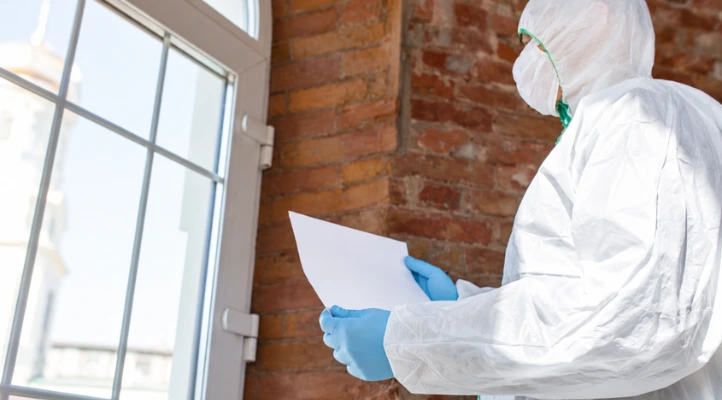
Your workplace may need a professional mould assessment when mould keeps returning, moisture problems persist, musty odours cannot be traced, or water damage has affected areas beyond what you can see. For facility managers, building owners and businesses, the priority is not simply removing visible mould. It is finding why it is growing, how far the problem extends and what needs to be fixed to stop it returning.
Here are 10 signs that it may be time to bring in a mould assessment specialist.
-
Mould Keeps Returning After Cleaning
If mould comes back after it has been cleaned, there is usually more to investigate.
The visible growth may have been removed while moisture remains behind walls, ceilings, flooring or other building materials. Recurring mould can also point to a leak, condensation problem or poor ventilation.
A professional assessment looks beyond the surface to identify conditions contributing to the problem.
-
You Can Smell Mould but Cannot Find It
A persistent musty or earthy odour can be an early clue that dampness or mould is present somewhere out of sight.
Potential problem areas include:
- wall and ceiling cavities
- carpet underlay
- storage areas
- insulation
- areas around plumbing
- HVAC components
For commercial buildings, guessing where the problem originates can lead to unnecessary repairs. LRM Global’s professional mould assessment and management services can help identify the source, assess the extent of contamination and recommend practical next steps.
-
Moisture Problems Never Seem to Go Away
Mould problems often start as moisture problems.
Watch for damp walls, ceiling stains, leaking pipes, wet flooring, high humidity or moisture around windows. Even if mould is not immediately visible, persistent dampness creates conditions where microbial growth can develop.
Safe Work Australia recommends routine building maintenance to prevent leaks and moisture build-up, along with effective ventilation and air-handling systems, as part of preventing workplace mould growth.
For businesses, identifying the moisture source early can help avoid a larger remediation project later.
-
The Building Has Had a Leak, Flood or Water Damage
A burst pipe, roof leak, storm event or flooding can affect much more than the visibly wet area.
Water can move into plasterboard, insulation, timber, flooring systems and wall cavities. Materials may look dry from the outside while moisture remains trapped underneath.
An assessment after significant water damage can help determine what has actually been affected before repairs, refurbishment or mould remediation begins.
This is particularly valuable for commercial properties, offices, educational facilities, accommodation, industrial sites and other managed buildings where unexpected remediation can disrupt normal operations.
-
Condensation Keeps Appearing
Regular condensation on windows, walls, ceilings, pipes or HVAC components deserves attention.
It may indicate an issue with relative humidity, ventilation, temperature control or airflow rather than an isolated cleaning problem.
For a facility manager, understanding why condensation keeps occurring is more useful than repeatedly treating the resulting mould.
A mould assessment can help connect the visible signs with the building conditions causing them.
-
Mould Is Showing Up in More Than One Area
One small affected area may have a local cause. Mould appearing across several rooms, levels or building zones can point to a wider issue.
The common factor could be water ingress, humidity, ventilation, HVAC performance or building-envelope problems.
Before organising remediation in several locations, it can be more cost-effective to understand whether those areas are connected.
This helps businesses scope remediation properly and reduces the risk of fixing one area while leaving the underlying cause untouched.
-
There Are Problems Around Your HVAC System
Mould or persistent moisture around vents, ductwork, air-conditioning components or HVAC plant rooms should be investigated rather than treated as a cosmetic issue.
HVAC systems influence airflow, humidity and temperature throughout a building. Drainage problems, condensation, maintenance issues or poor airflow can contribute to conditions that allow mould to return.
LRM Global can assess mould as part of the broader building environment, rather than looking at the visible growth in isolation.
If your concern is broader than mould and relates to ventilation, airborne contaminants or workplace air conditions, LRM Global also provides workplace air quality monitoring and assessment.
-
Mould Returns After Remediation
Mould coming back after professional remediation is a strong reason to investigate further.
It can mean the original moisture source was not resolved, affected materials were missed or contamination extended beyond the original remediation area.
This is where independent assessment can add real value.
LRM Global provides pre-remediation assessments to establish the extent and source of contamination before work begins, as well as post-remediation verification testing to assess the outcome after remediation.
That gives building owners and facility managers evidence to support their next decision rather than assuming the problem has been resolved.
-
You Are About to Renovate an Affected Area
If an area has a history of water damage, dampness, visible mould or unexplained odours, investigate it before opening walls, removing ceilings or replacing flooring.
Renovation can expose concealed contamination and turn a relatively contained issue into a larger project.
An assessment before work begins can help you understand:
- what areas may be affected
- whether sampling is appropriate
- what needs remediation
- whether moisture sources need correction
- how remediation should fit into the project scope
For businesses managing multiple workplace risks during refurbishment or building works, LRM Global’s broader Hygiene and OHS consulting services can support environmental and occupational hygiene risk management across the project.
-
Nobody Can Explain Why the Mould Keeps Coming Back
Sometimes the building has already been inspected, cleaned and repaired, yet the mould returns.
At that point, continuing to clean the surface can become an expensive cycle.
A professional investigation can look at the problem as a whole, including moisture intrusion, building materials, ventilation, previous water damage, HVAC conditions and concealed areas.
LRM Global’s approach includes cause analysis, sampling where appropriate, moisture investigation and tailored remediation recommendations. The aim is to give your business a practical way forward, not simply confirm that mould exists.
What Your Business Gets From a Professional Mould Assessment
For a facility manager or property owner, the real value of an assessment is better information before money is spent on remediation.
Depending on the site, LRM Global can help establish:
- where the mould or moisture problem is coming from
- how far contamination may extend
- whether concealed building materials are affected
- whether sampling or monitoring is appropriate
- whether HVAC or ventilation conditions are contributing
- what should be addressed before remediation
- whether previous remediation has been successful
- what measures may help prevent recurrence
LRM Global combines mould investigation, indoor air quality monitoring, cause analysis, pre-remediation assessment, post-remediation verification and tailored remediation recommendations to help businesses make informed decisions.
Safe Work Australia also recognises mould as a potential workplace biological hazard, particularly in environments affected by contaminated materials or water damage. Its current guidance reinforces a practical point for building managers: managing moisture and maintaining effective ventilation are important parts of preventing mould growth.
If your main concern is employee comfort or general indoor air quality rather than a specific mould problem, read our guide on how office air quality can affect workplace health for more context.
Find the Cause Before Paying to Fix the Problem Again
Recurring mould is rarely something a commercial property should manage through repeated surface cleaning alone.
Finding the source can help reduce repeat remediation costs, limit disruption, protect building materials and give contractors a clearer scope of work.
LRM Global’s experienced hygiene and environmental professionals provide mould investigation and assessment for commercial and workplace environments, with services available through its Victoria and Queensland teams.
If you have recurring mould, unexplained moisture, previous water damage or need an independent assessment before or after remediation, speak with an LRM Global mould specialist.