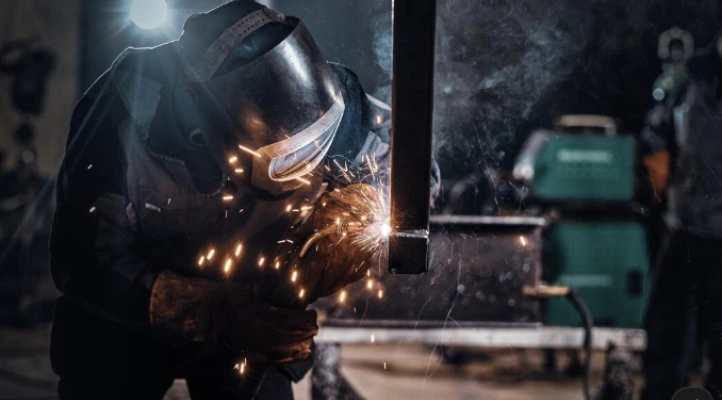
Your workshop may need welding fume exposure monitoring if you’re unsure whether workers are exposed above the applicable workplace exposure standards or whether existing controls adequately manage exposure.
Monitoring is particularly important when welding is frequent, ventilation is ineffective or your operations involve metals that produce hazardous airborne contaminants. Even with extraction systems and respiratory protection in place, you cannot assume exposure is adequately controlled.
Personal air monitoring provides measurable evidence of worker exposure and helps you determine whether further safety measures are needed. In Victoria, atmospheric monitoring is required in specified circumstances where exposure standards may be exceeded or monitoring is needed to assess a health risk.
At LRM Global, we help workshops and manufacturers assess welding fume exposure, evaluate existing controls and make informed occupational health and safety decisions.
When Does Your Workshop Need Welding Fume Monitoring?
Your workshop needs to consider exposure monitoring when welding activities create potential exposure risks that cannot be confidently assessed using existing information.
Under Victorian OHS requirements, atmospheric monitoring is required where there is uncertainty about whether an applicable exposure standard is or may be exceeded, or where monitoring is necessary to determine a risk to health.
| Workshop condition | Why you should consider monitoring |
| Frequent or prolonged welding | Assess exposure during representative working shifts. |
| Multiple welding stations | Determine whether fumes affect welders and nearby workers. |
| Inadequate ventilation | Check whether airborne contaminants are sufficiently controlled. |
| Stainless steel or coated metal welding | Assess exposure to relevant hazardous metals and other substances. |
| New welding equipment or processes | Determine whether operational changes affect exposure. |
| Uncertain extraction performance | Evaluate whether existing controls adequately reduce worker exposure. |
We recommend reviewing your exposure risks whenever welding activities, materials or working conditions change.
What Welding Fume Exposure Limits Apply in Victoria?
The workplace exposure standard for welding fumes not otherwise classified is 1 mg/m³ as an eight-hour time-weighted average, introduced in Victoria in January 2024.
However, welding fumes can contain individual hazardous substances, including manganese, chromium and nickel, with separate applicable exposure standards.
Meeting the general welding fume limit does not automatically mean exposure to every hazardous component is adequately controlled.
According to WorkSafe Victoria’s welding fume guidance, employers must manage welding fume exposure and meet applicable workplace safety obligations.
Exposure standards are limits, not recommended operating targets. We advise reducing exposure so far as reasonably practicable, even where monitoring results are below the applicable limits.
How Can You Tell Whether Your Welding Fume Controls Are Working?
Existing ventilation, extraction equipment and respiratory protection should be assessed under actual workshop operating conditions.
Simply having these controls installed does not confirm that they are effective.
| Existing control | What you should check |
| Local exhaust ventilation | Whether fumes are captured close to the welding source. |
| On-torch extraction | Whether extraction remains effective during welding tasks. |
| General ventilation | Whether contaminated air is adequately removed from occupied areas. |
| Respiratory protective equipment | Whether equipment is suitable, correctly fitted, maintained and used. |
| Welding procedures | Whether work practices minimise unnecessary fume generation. |
| Equipment maintenance | Whether extraction systems and filters are operating as intended. |
Is Workshop Ventilation Enough Without Exposure Monitoring?
Ventilation may control welding fumes effectively, but its presence alone does not establish worker exposure levels.
Where the effectiveness of ventilation is uncertain, personal exposure monitoring can help assess whether additional controls are required.
We look at how your equipment performs during normal welding activities, including worker positioning, extraction placement and nearby operations.
What Happens During Welding Fume Exposure Monitoring?
Welding fume exposure monitoring involves assessing workplace conditions and measuring airborne contaminants to understand workers’ exposure during welding activities.
Our occupational hygiene approach focuses on collecting representative information that supports practical workplace safety decisions.
The process generally includes:
- Reviewing your welding operations. We assess welding methods, materials, work duration and existing controls.
- Identifying exposure risks. We determine which workers, tasks and airborne contaminants require assessment.
- Conducting personal air monitoring. Sampling equipment collects airborne contaminants near workers’ breathing zones.
- Analysing samples. Collected samples are analysed using appropriate methods for the substances being assessed.
- Interpreting the findings. We compare suitable exposure results with relevant workplace exposure standards and consider the monitoring conditions.
- Recommending improvements. We identify controls or further assessments where necessary.
Is Personal Air Monitoring Different From Workshop Air Testing?
Yes. Personal air monitoring measures contaminants near a worker’s breathing zone and is used to assess individual occupational exposure.
Static or area air monitoring measures concentrations at fixed locations and may help investigate general workshop conditions or potential exposure in surrounding areas.
For assessing workers against occupational exposure standards, appropriately conducted personal monitoring is generally the relevant method.
What Happens If Welding Fume Exposure Exceeds the Limit?
If monitoring identifies exposure above an applicable workplace exposure standard, you must take appropriate action to reduce exposure and address the associated risks.
Depending on the findings, we may recommend reviewing:
- Local exhaust ventilation or on-torch extraction performance.
- Welding methods, materials and consumables.
- Workstation positioning and separation of activities.
- Maintenance and inspection procedures.
- Suitable respiratory protection and worker training.
- Follow-up exposure monitoring after control improvements.
We apply the hierarchy of control when assessing exposure management, prioritising measures that eliminate or reduce hazards at their source.
Monitoring results should help you understand which controls need attention rather than simply recording whether an exposure limit was exceeded.
When Should You Repeat Welding Fume Monitoring?
Welding fume exposure monitoring should be reviewed when workshop conditions change or previous assessment results no longer represent current exposure.
You should consider reassessment when:
- New welding processes or equipment are introduced.
- Different metals, coatings or consumables are used.
- Production volumes or welding hours increase.
- Ventilation or extraction systems are modified.
- Workers raise concerns about welding fumes.
- Previous results identify elevated exposure or uncertain findings.
There is no universal monitoring interval suitable for every workshop. Your monitoring program should reflect workplace risks, applicable obligations and changes to operating conditions.
Arrange Welding Fume Exposure Monitoring in Melbourne
If you’re unsure whether your welding operations are adequately controlled, we can help you assess worker exposure and identify practical safety improvements.
At LRM Global, our Welding Fume Monitoring services support Melbourne workshops and manufacturers with occupational exposure assessments, air monitoring and HSE risk management advice.
Need to check welding fume exposure in your workshop? Contact LRM Global to discuss your operations, existing controls and monitoring requirements.